
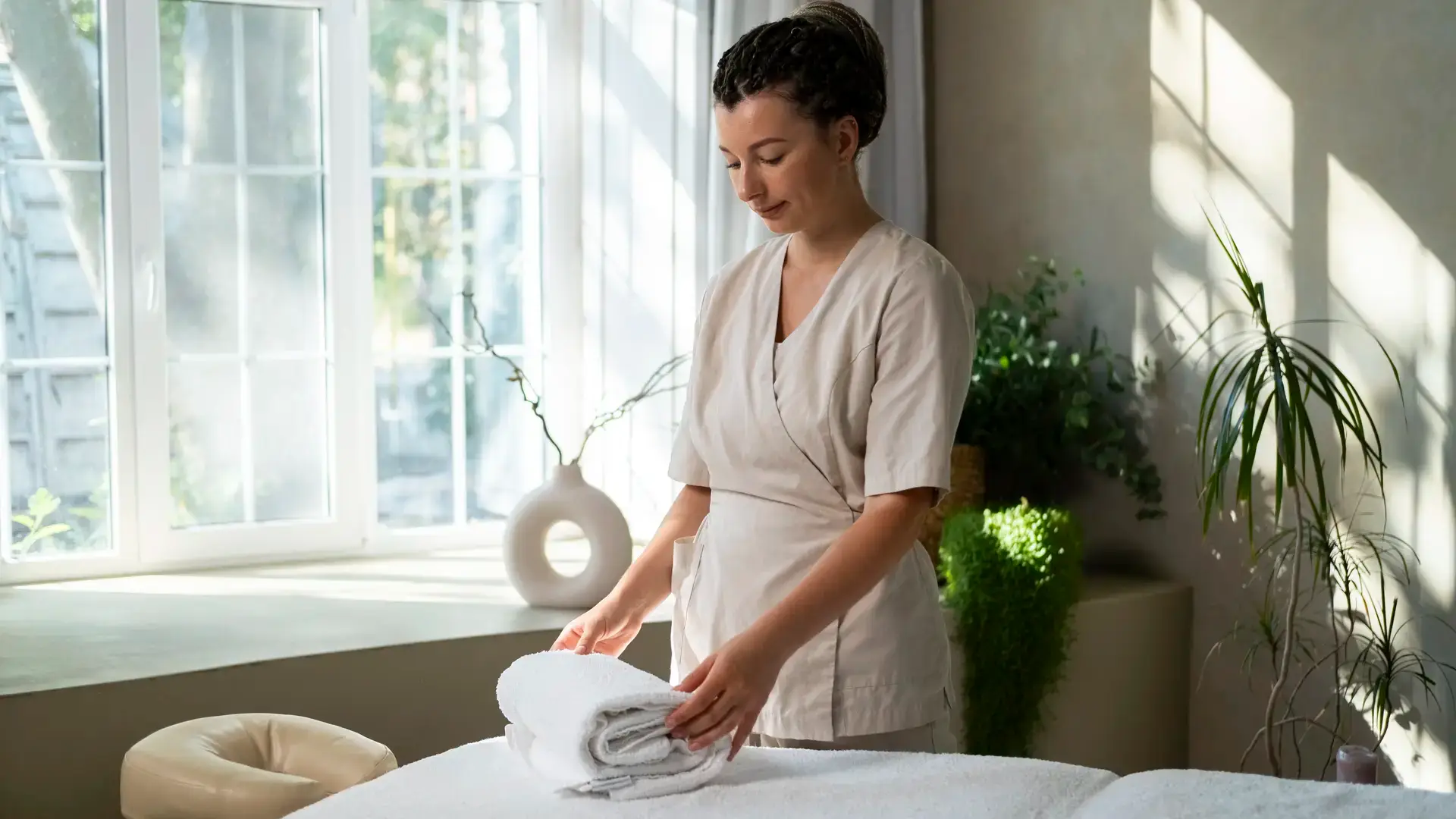
A clean salon is not just about first impressions. In a personal services environment, hygiene directly affects client safety. Scissors, razors, nail tools, and wax applicators come into contact with skin, cuticles, and open pores every hour of the business day, and the surfaces around them accumulate product residue, hair, and bacteria between clients.
Reliable salon and spa cleaning services in Birmingham, AL help salons and spas meet the hygiene standards that Alabama cosmetology licensing requires, protect clients from infection risk, and make every visit feel as fresh for the last client of the day as it does for the first.
A complete salon cleaning plan covers three levels: cleaning to remove visible debris and product residue, sanitizing to reduce germs on surfaces and tools between clients, and disinfecting implements that make direct skin contact. Most violations found during cosmetology inspections involve skipping one of these levels, not the others.
What salon and spa cleaning services actually cover
A cleaning plan for a hair salon, nail salon, or day spa is not the same as a standard commercial cleaning plan. The specific surfaces, products, and hygiene risks in personal services environments require a more detailed approach, particularly around treatment stations, pedicure bowls, and wax areas.
A complete cleaning plan for a salon or spa typically includes:
- Wiping and disinfecting treatment stations between each client
- Cleaning and disinfecting pedicure bowls and footbaths according to state requirements
- Sweeping and mopping floors throughout the facility, including under stations
- Cleaning reception desks, retail display areas, and waiting room seating
- Sanitizing high-touch surfaces: door handles, light switches, credit card readers
- Laundering or changing out towels and linens between clients
- Cleaning and restocking restrooms
- Deep cleaning shampoo bowls, mirrors, and styling area surfaces
The frequency and depth of each task varies depending on whether the space is a hair salon, nail salon, waxing studio, or full-service day spa, but all personal services environments share the same underlying need for consistent, documented sanitation.
The difference between cleaning, sanitizing, and disinfecting in a salon
These distinctions matter more in a personal services setting than in almost any other commercial environment, partly because of licensing regulations and partly because of the direct physical contact between tools and clients.
Cleaning removes visible product, hair, and debris from surfaces and tools. Sanitizing reduces the number of germs to a level considered safe for general use. Disinfecting kills most remaining pathogens after cleaning and is required for implements that contact skin in Alabama-licensed salons.
In practice, this means a pair of scissors should be cleaned of visible debris, then fully submerged in an EPA-registered disinfectant solution or run through an approved sterilization process before use on the next client. The same applies to nail files, cuticle tools, and any other implements that make direct skin contact.
Sanitizing salon stations between clients
Between every client, the station itself needs to be reset and sanitized, not just wiped. This covers the chair, armrests, cape clips, and any styling tools that remain at the station. Product buildup on spray bottles, hairdryer handles, and flat iron grips is easy to overlook but accumulates quickly over the course of a busy week.
A station reset between clients typically takes only two to three minutes when it is done consistently, but those minutes matter. A client sitting in a chair with visible hair from the previous appointment, or product residue on the armrests, forms a negative impression that is hard to reverse even with an excellent service.
Professional salon and spa cleaning services in Birmingham, AL help maintain the station standard throughout the day, complementing the quick client-facing resets that stylists handle themselves with a more thorough cleaning at the end of each shift.
Pedicure bowl sanitation standards
Pedicure bowls and footbaths are among the most regulated surfaces in a nail salon, and for good reason. Improperly cleaned pedicure equipment has been linked to bacterial skin infections in multiple documented cases across the country. Alabama cosmetology regulations specify how often pedicure bowls must be cleaned, disinfected, and documented.
The standard process includes:
- Draining and removing all debris after each client
- Cleaning the bowl with soap and water to remove visible residue
- Filling with an EPA-registered disinfectant solution at the correct dilution
- Allowing the solution to circulate through jets for the required contact time
- Draining and rinsing before the next client use
- At end of day: a more thorough disinfection cycle, followed by draining and air drying
Keeping a written log of each cleaning cycle is required by Alabama licensing and protects the salon in the event of a client complaint or inspection.
Towel and linen sanitation in salons and spas
Towels and linens are touched by clients and staff throughout the entire service, which makes their hygiene as important as the equipment hygiene. Used towels need to be separated from clean ones immediately and laundered before being returned to the service floor.
For day spas and facilities with high linen use, a dedicated laundry process with appropriate water temperature and drying time is part of the service standard. Using a professional linen service or an on-site washing and drying protocol that meets state guidelines keeps the supply clean, adequately stocked, and compliant.
Single-use disposable options, such as paper towels for certain tasks or disposable pedicure liners, can reduce laundry volume and the risk of cross-contamination between clients in higher-volume services.
Cleaning wax and treatment areas
Wax rooms and facial treatment rooms carry their own cleaning requirements. Wax drips on surfaces, paper table covering needs to be replaced between every client, and product residue builds up on equipment and surfaces quickly.
Wax warmers, applicator holders, and any surfaces that contact product or skin need cleaning at the end of each treatment. The table itself should be wiped down with an appropriate disinfectant after removing the paper cover, and a fresh cover placed before the next client arrives.
Treatment rooms also need their floors swept and mopped regularly since product spills and wax drips reach the floor throughout the day, particularly near the treatment table.
Reception area and retail display cleaning
The reception desk in a salon or spa is often the most visually prominent surface in the entire space, and it is touched by every client who books, pays, or waits. Reception cleaning as part of a full salon plan covers the desk surface, card reader, display products, and any seating in the waiting area.
Retail displays, common in salons that sell product lines, need dusting and surface wiping on a regular schedule. Product residue from sampling, fingerprints on glass shelves, and dust on product packaging all affect how the retail area reads to clients. A clean, well-organized retail area also tends to increase product sales, since clients are more likely to browse and buy when the space feels maintained.
Building a cleaning schedule that fits salon hours
Salons and spas typically operate six days a week with back-to-back client appointments from open to close. This leaves very little downtime for cleaning during operating hours, which means most deep cleaning has to happen before opening or after the last client leaves.
A workable schedule for most salons looks like this:
- Between clients: stylist or technician resets their own station and replaces any single-use items
- Throughout the day: sweeping hair from floors as needed, restroom checks
- End of day: professional cleaning of all stations, floors, shampoo bowls, and restrooms
- Weekly: deep cleaning of pedicure bowls, grout and tile in wet areas, and product storage surfaces
Building the professional clean at the end of the day rather than relying on stylists to handle it themselves produces more consistent results and lets service staff leave on time rather than staying late to clean.
What to look for in a salon cleaning partner
Not every commercial cleaning company understands the regulatory environment or the product-specific challenges of a personal services business. A provider who is accustomed to office or retail cleaning may not know how to navigate around a color bar, handle product-coated surfaces safely, or understand why certain areas require documented cleaning logs.
Key questions for salon and spa owners:
- Do they have experience cleaning personal services environments?
- Are they familiar with Alabama cosmetology licensing requirements for sanitation?
- Can cleaning be scheduled after closing to avoid disrupting client appointments?
- Are staff trained on the difference between cleaning, sanitizing, and disinfecting?
According to OSHA’s bloodborne pathogens standard, any workplace where employees may contact blood or other potentially infectious materials, which applies to nail salons and waxing studios, must have a written exposure control plan and follow specific decontamination procedures, making professional cleaning knowledge especially important in these settings.
Frequently asked questions
How often should salon stations be professionally cleaned? Stylists should reset stations between every client, but a thorough professional clean of all surfaces, including behind and under stations, mirror frames, and product storage areas, should happen at the end of each business day.
Are there specific regulations for salon cleaning in Alabama? Yes. The Alabama Board of Cosmetology and Barbering sets specific requirements for implement disinfection, pedicure bowl sanitation, and surface cleaning standards. Professional cleaning services familiar with these requirements can build a plan that supports compliance.
Can one cleaning company handle the whole salon, including laundry? It depends on the provider. Some commercial cleaning companies include basic linen services or can coordinate with a linen service. Others focus on surface cleaning only. It is worth clarifying scope before signing a contract.
What is the biggest hygiene risk in a salon or spa? Implement and surface contamination between clients is the most direct risk. Shared tools that are not properly disinfected between uses, pedicure bowls that are not fully drained and treated, and tables that are wiped but not disinfected all create conditions for skin and nail infections.
A cleaner salon, more confident clients
Clients who can see evidence of a clean, well-maintained salon are more likely to rebook, refer others, and trust the services they receive. Consistent cleaning, covering everything from stations and pedicure bowls to towels and restrooms, gives owners and staff one fewer thing to manage so they can focus on delivering great services.
A salon that cleans reactively, only responding to visible problems or complaints, tends to fall behind gradually until the condition of the space becomes noticeable to clients. A salon that cleans consistently, on a clear schedule with professional support, maintains the standard that clients associate with quality before they even sit down in the chair.
If your salon or spa is ready for a cleaning partner who understands personal services environments, Pristine Cleaning’s commercial cleaning services can build a plan around your hours and licensing requirements. For other Birmingham businesses that depend on strict hygiene standards, our gym cleaning services guide covers a similarly high-contact commercial environment. Request your free estimate to get started.