
A refrigerator is more than just a kitchen appliance; it’s the hub of your home’s nutrition. However, between weekly groceries, accidental spills, and the occasional forgotten leftovers, even the most modern units can develop unpleasant odors.
If you’ve noticed a lingering scent every time you open the door, it’s a sign that your appliance needs more than just a quick air-out. By combining proactive organization with a systematic cleaning routine, you can restore a crisp, clean environment that keeps your food safer and your kitchen smelling pristine.
Why This Cleaning Task Matters
Odors in the refrigerator are rarely just “bad smells”—they are often indicators of trapped bacteria, mold growth, or decaying organic matter hidden in plain sight.
- The “Hidden” Sources: Odors often originate from micro-spills in drawer tracks, sticky residue on the undersides of shelves, or old produce leaking juices into the crisper bins.
- Performance & Efficiency: A clean fridge isn’t just about hygiene; it ensures proper airflow. Overloading shelves or allowing spills to block vents can force the appliance to work harder to maintain temperature, which can accelerate food spoilage and odor buildup.
- The Organization-Cleaning Loop: Odor control is most effective when cleanliness and organization work together. When every item has a labeled “home,” you’re less likely to lose track of items, and spills become easier to spot and address before they turn into permanent odors.
Step-by-Step Cleaning Method
To truly neutralize odors, you need to address the source rather than just masking the symptoms. Follow this sequence for a deep, restorative clean.
1. The Audit and Clear-Out
Remove all food items from the refrigerator. This is the perfect time to toss expired products, mystery containers, and wilted produce. If you have perishables, place them in a cooler bag to maintain their temperature while you work.
2. Deep Cleaning Surfaces
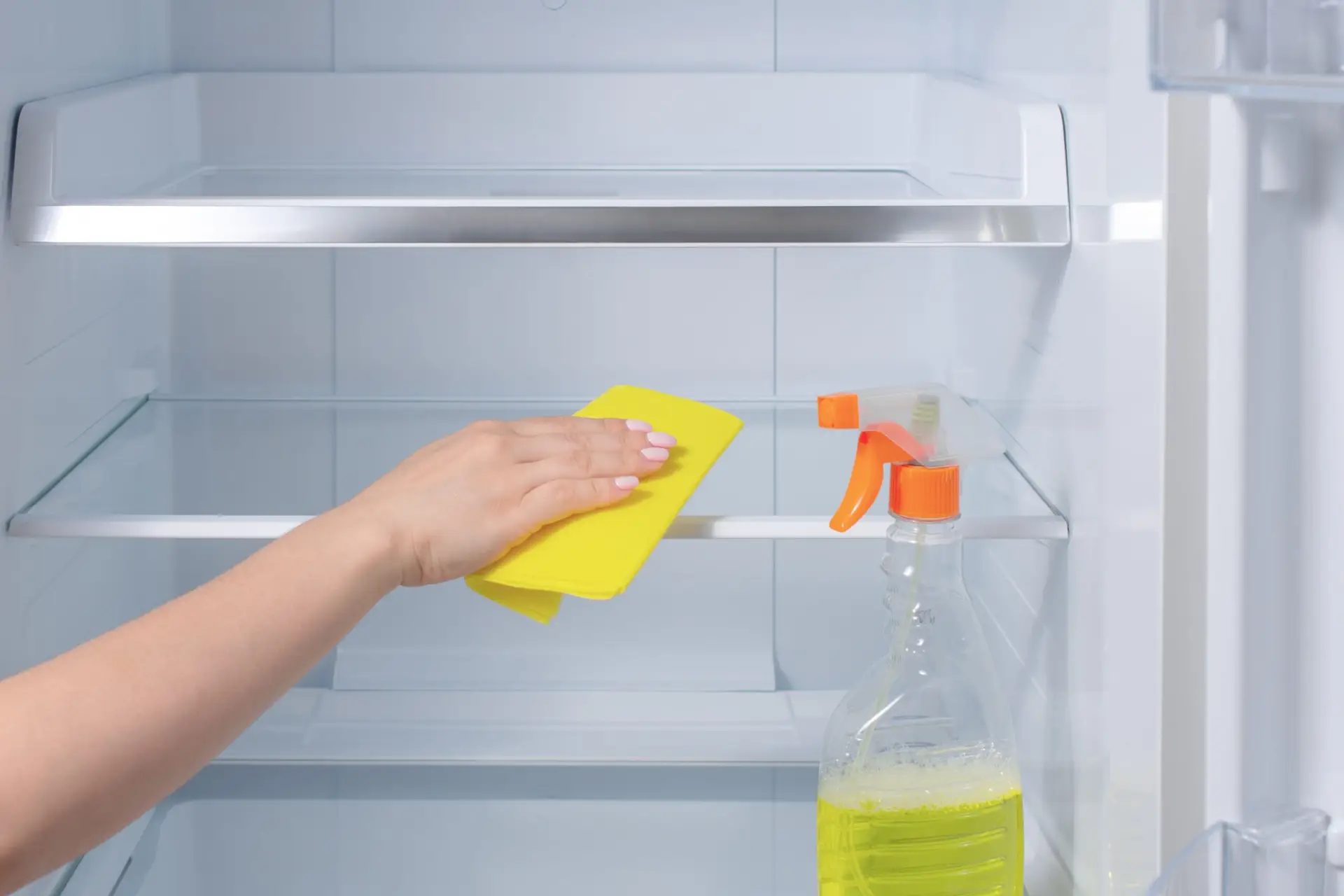
- Removable Components: Take out all shelves, drawers, and door bins. Wash them in your sink using warm, soapy water—avoid using scalding water on cold glass, as it can cause cracking.
- Interior Walls and Seals: Wipe down the interior walls, floor, and ceiling of the unit. Don’t forget the rubber door gaskets—these trap moisture and crumbs, making them a common hotspot for mold. Use a soft brush or toothbrush to gently clean the crevices of the seals.
- Drip-Prone Areas: Check the tracks where drawers slide. Dried-on spills here are frequent culprits for lingering smells.
3. Dry and Reassemble
Moisture is the enemy of a fresh fridge. Ensure every shelf and drawer is 100% dry before placing them back. Reintroducing damp components is a fast track to future bacterial growth.
4. Optimize Storage
As you restock, use airtight containers to lock in flavors and prevent cross-contamination. Group items by category (e.g., dairy, produce, condiments) and add date labels to leftovers to prevent the “mystery item” cycle from starting again.
Mistakes to Avoid
- Masking Instead of Removing: Don’t just rely on baking soda to “fix” a dirty fridge. If a spill is still present, the smell will return.
- Ignoring the Edges: Many people clean the center of a shelf but ignore the underside and the grooves where it meets the fridge wall. These are prime areas for grime buildup.
- Overloading: A packed fridge limits air circulation, leading to uneven cooling and trapped smells.
When Professional Cleaning Helps
While daily habits like wiping spills are up to the homeowner, deep cleaning a refrigerator is labor-intensive and requires careful handling of food and components.
Pristine Cleaning provides the recurring kitchen upkeep that keeps your home’s appliances in peak condition. While we specialize in maintaining exterior surfaces, handles, and nearby cabinetry—keeping your entire kitchen environment grease-free and polished—we also offer specialized deep-cleaning services for appliance interiors. Letting our team handle the systematic, detailed work ensures your refrigerator remains a hygienic, fresh-smelling asset to your home, allowing you to focus on the things that matter most.
Ready to enjoy a flawlessly fresh kitchen?
Click here to get your custom quote from Pristine Cleaning and let us handle your next deep-clean!
FAQ
Why does my refrigerator smell even after I remove old food?
The odor is likely trapped in porous materials like rubber gaskets, drawer tracks, or stuck-on residue on the underside of shelves. Thoroughly cleaning these overlooked spots with mild soap and water usually solves the issue.
How often should I clean the inside of my refrigerator?
A quick wipe-down of spills should happen as they occur, with a full deep clean recommended every three to six months to prevent the buildup of bacteria and odors.
What helps prevent refrigerator odors?
The best prevention includes storing food in airtight containers, performing a weekly check for expired items, keeping the fridge organized to ensure proper airflow, and keeping an open box of baking soda on a shelf to neutralize ambient moisture and odors.