
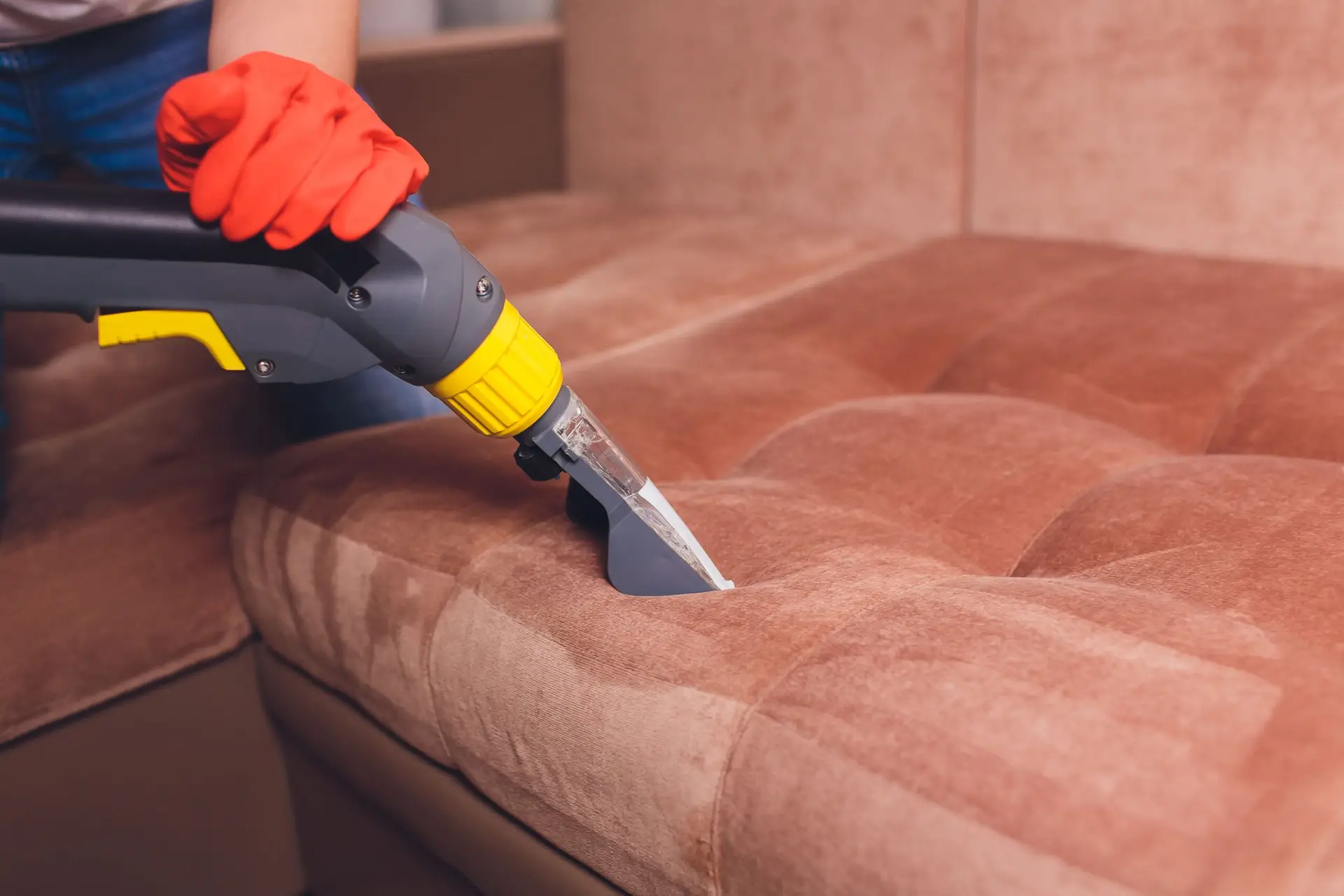
Quick Answer: The Safest Way to Clean Upholstery
Vacuum first to remove dry debris before using moisture.
Always start with dry extraction to lift loose crumbs, hair, and grit before introducing any liquid.
Check the fabric care tag and test any cleaner in a hidden area.
Look for manufacturer codes (W, S, WS, or X) on the tag and test your cleaning solution on a concealed spot underneath the sofa first.
Use minimal water and blot, never scrub aggressively.
Control moisture carefully and always dab or blot stains rather than rubbing fibers, which can fray the fabric.
Why Upholstered Furniture Gets Dirty So Quickly
Dust, crumbs, pet hair, body oils, and humidity all settle into fabric.
Couches and armchairs act as large fabric filters, trapping dead skin cells, airborne dust, pet dander, and oils directly within the weave.
High-use seating areas need more frequent attention than decorative chairs.
Sofas used daily by family members and pets accumulate grime much faster than formal accent chairs.
Step-by-Step Upholstery Cleaning Method
Remove cushions and vacuum seams, edges, and crevices.
Take off all removable cushions and use a crevice tool to vacuum deep inside tight seams and corners.
Spot clean light stains with a fabric-safe solution.
Mix a few drops of mild dish soap with warm water, or use a specialized upholstery shampoo for tougher spots.
Use a white microfiber cloth to avoid color transfer.
Always use plain white cloths so colored dyes won’t bleed onto your upholstery.
Let the fabric dry fully before replacing cushions.
Keep ceiling fans running and allow the furniture to air-dry completely to prevent trapped moisture and musty odors.
For delicate fabric, avoid soaking, steam, and harsh scrubbing.
Velvet, silk, and vintage textiles require extreme care and dry-cleaning methods rather than wet washing.
CTA: Recommend professional residential or deep cleaning when upholstery is part of a whole-home refresh.
When refreshing your living space, pair your upholstery upkeep with expert Residential Cleaning or a comprehensive Deep Cleaning to keep your entire home immaculate.
Mistakes That Can Damage Upholstery
Using too much water.
Saturating foam cushions underneath causes long drying times, water rings, and potential mold growth.
Rubbing stains instead of blotting.
Scrubbing pushes stains deeper into the cushion fibers and fuzzes the fabric surface.
Using bleach or strong solvents on fabric.
Harsh chemicals can permanently bleach fabric dyes and weaken textile threads.
When Professional Cleaning Helps
Tie the article to Pristine Cleaning for dust-heavy homes, pet homes, and seasonal deep cleaning.
Homes with shedding pets, allergy sufferers, or high foot traffic require specialized attention. To learn great tips on managing everyday dust, check out our guide on how to protect your home from everyday dirt and dust.
Frequently Asked Questions
How often should upholstered furniture be cleaned?
Vacuum your upholstered furniture weekly or bi-weekly, and schedule a surface spot-cleaning every 3 to 6 months.
Can I use an all-purpose cleaner on fabric furniture?
No. All-purpose cleaners often contain harsh chemicals or degreasers that can discolor or break down upholstery fabrics.
Should I steam clean upholstered furniture?
Only if the fabric care tag permits wet cleaning (Code W or WS). Using a steamer on delicate or dry-clean-only fabrics can cause permanent shrinkage.
How do I remove odors from upholstery?
Sprinkle baking soda generously across the fabric, let it sit for 30 to 60 minutes to absorb trapped odors, and vacuum it up thoroughly.
Can professional house cleaning include furniture dusting?
Yes! Professional cleaners routinely dust wooden furniture frames, wipe down chair legs, and vacuum upholstered surfaces during thorough home visits.