
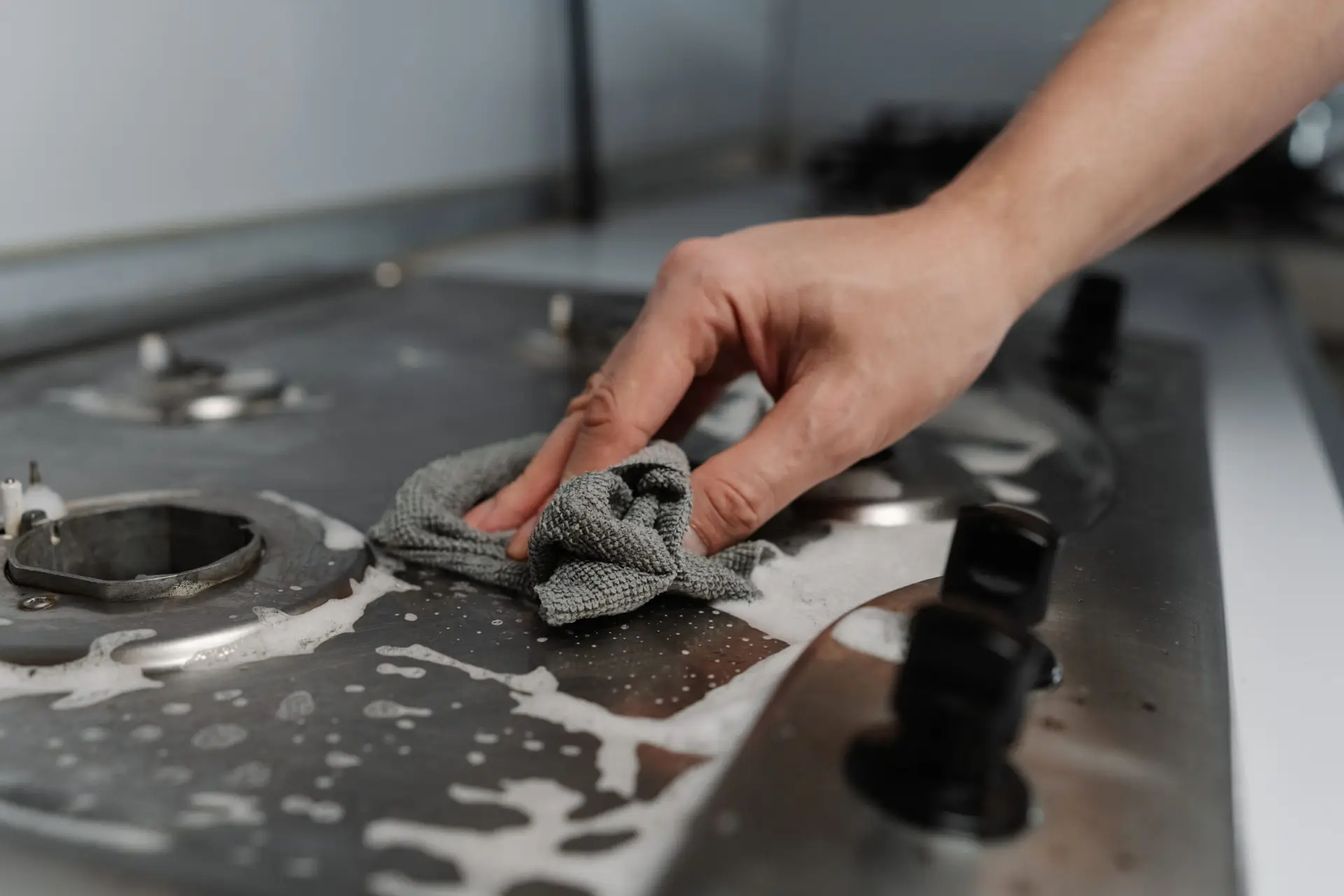
Achieving a spotless, streak-free shine on modern kitchen surfaces starts with understanding the finish-safe sequence: identify the protective coating or grain pattern, clean gently using appropriate products, remove all residual film, and dry thoroughly with a clean microfiber buffing cloth. Because appliance manufacturers use distinct metal alloys and protective clear coats, no single chemical solution or cleaner suits every stainless appliance on the market.
Before tackling exterior appliance care, it helps to understand where exterior surface maintenance fits into a broader kitchen reset. For comprehensive guidance on room-by-room sanitation, consult our guide on how to deep clean a kitchen.
What Is the Safest Way to Clean Stainless Steel?
The safest way to clean stainless steel appliances is to use a microfiber cloth dampened with warm water and a tiny drop of mild, pH-balanced dish soap, wiping gently in the direction of the metal grain before buffing the surface completely dry with a second microfiber towel. Always prioritize the manufacturer’s user manual over generic online DIY recipes. Essential supplies include clean microfiber cloths, mild liquid dish soap, warm water, and an approved stainless steel cleaner if recommended by the appliance maker.
Identify Your Appliance Finish Before Cleaning
Applying the wrong cleaner to modern kitchen metals can permanently dull protective coatings or create cloudy, irreversible streaks.
Traditional Brushed Stainless Steel
Traditional brushed stainless steel features a visible, linear mechanical grain across the metal face. Wiping and buffing strictly in the direction of these parallel grain lines ensures that microscopic cleaning paths blend with the brushed finish rather than catching the light as unsightly cross-swirls.
Fingerprint-Resistant and Black Stainless Steel
Fingerprint-resistant stainless and black stainless steel feature specialized polymer or tinted protective topcoats designed to mask smudges. These sensitive coatings require mild dish soap and water where manufacturer-approved; avoid aggressive commercial polishes, abrasive pads, or chemical degreasers that can strip or discolor the protective layer.
Check the Care Instructions for Your Model
Always consult your specific appliance model manual or the manufacturer’s online care portal (such as Whirlpool’s stainless care guide or their fingerprint-resistant exterior guide) before applying commercial sprays. Never treat a brand-wide cleaning tip as blanket permission for every custom finish.
Step-by-Step Cleaning Without Smears
Follow this systematic method to restore a brilliant exterior shine without leaving oily residue:
Remove Loose Dust and Food Splashes
Before wiping or buffing, use a dry microfiber cloth to gently sweep away loose dust, dried food splashes, or kitchen grit. Wiping abrasive food debris across metal surfaces causes fine micro-scratches.
(Note: For cleaning removable small appliances and blender parts, refer to our guide on small kitchen gadget cleaning.)
Apply a Compatible Cleaner Sparingly
Never spray cleaning solutions directly onto appliance doors, as liquid overspray can seep behind electronic control panels, stain adjacent stone countertops, or ruin cabinetry. Instead, apply a small amount of cleaner directly onto your microfiber cloth.
Remove Residue and Dry With a Second Cloth
Overapplying cleaning polish or reusing an oily, damp cloth is the primary cause of cloudy streaks. Always follow your initial cleaning pass with a second, completely dry microfiber buffing cloth to polish the metal to a clear shine.
Why Stainless Steel Still Looks Streaky After Cleaning
Even after a thorough wipe-down, streaks, smudges, or surface flaws can occasionally appear.
Cleaner Buildup, Hard-Water Marks, and Dirty Cloths
| Issue / Cause | Next Step | Stop Condition |
| Cleaner Buildup: Oily residue left from overapplied commercial polishes. | Wipe down with a cloth dampened in warm soapy water, then buff dry with clean microfiber. | Surface feels smooth and reflects light evenly without cloudiness. |
| Hard-Water Marks: Mineral spots left by hard tap water droplets. | Wipe with a 50/50 mix of distilled water and white vinegar (if approved), then dry immediately. | Water rings and mineral crust disappear completely. |
| Dirty or Damp Cloths: Reusing a towel that contains residual grease or detergent. | Switch to a fresh, laundered microfiber cloth stored away from kitchen oils. | No secondary smudges or film transfer occur during buffing. |
Scratches, Peeling Coatings, and Discoloration
Routine cleaning cannot restore a damaged protective coating or remove deep physical metal scratches. Never attempt aggressive abrasive restoration or DIY metal-scratch kits on coated black stainless steel.
Products and Tools to Avoid
Protect your investment by keeping harsh materials away from your stainless appliances:
- Steel Wool and Abrasive Scrubbers: Metal scouring pads instantly gouge and permanently ruin brushed stainless finishes.
- Harsh Chemical Bleach and Chlorine: Concentrated chemical bleaches pit metal alloys and cause discoloration.
- Acidic Mixtures: Unapproved high-acidity solutions can corrode protective finishes.
- Cooking Oils as Polish: Avoid using olive or vegetable oils as a universal polish; organic oils attract airborne kitchen dust, turn rancid, and leave sticky films.
Keep Kitchen Exteriors Clean Between Visits
To maintain a pristine look through October hosting and daily meal preparation, adopt a quick post-cooking routine: wipe down appliance handles and high-touch surface zones with a damp microfiber cloth immediately after cooking, and buff dry to prevent water and grease spots from baking onto warm metal.
Kitchen Cleaning Help in Birmingham
Keeping appliance exteriors, countertops, and kitchen zones immaculate takes consistent effort. For homeowners seeking professional support, our team provides thorough, reliable residential cleaning in Birmingham. When booking, be sure to confirm any specialist appliance interior or custom finish requests so our team can tailor the scope to your exact needs.
Request a Cleaning Plan for Your Kitchen
When requesting a free estimate, describe your appliance finishes (such as traditional brushed, black stainless, or fingerprint-resistant) and your specific cleaning priorities. Contact our team today to request a cleaning estimate.
Frequently Asked Questions
Can I use vinegar on stainless steel appliances?
It depends on the manufacturer guidelines and your specific appliance finish. While diluted white vinegar can help cut mineral spots on traditional stainless steel, it can etch or damage specialized protective topcoats on black or fingerprint-resistant stainless steel. Always consult your manual first.
Why does my refrigerator look worse after cleaning?
A refrigerator often looks cloudier after cleaning due to excess cleaning product buildup, hard-water mineral residue, or using a damp, dirty buffing cloth that smears oils across the metal grain rather than lifting them away.
Can I use the same cleaner on black stainless steel?
No. Black stainless steel and fingerprint-resistant finishes feature delicate protective resin or polymer coatings that can be permanently ruined by standard abrasive stainless steel polishes, heavy solvents, or harsh scouring pads.
Does house cleaning include appliance interiors?
Routine standard house cleaning covers the exterior surfaces of your refrigerator, stove, and dishwasher. Cleaning appliance interiors (such as inside the oven or refrigerator cavity) requires a dedicated interior service scope and should be confirmed when booking.