
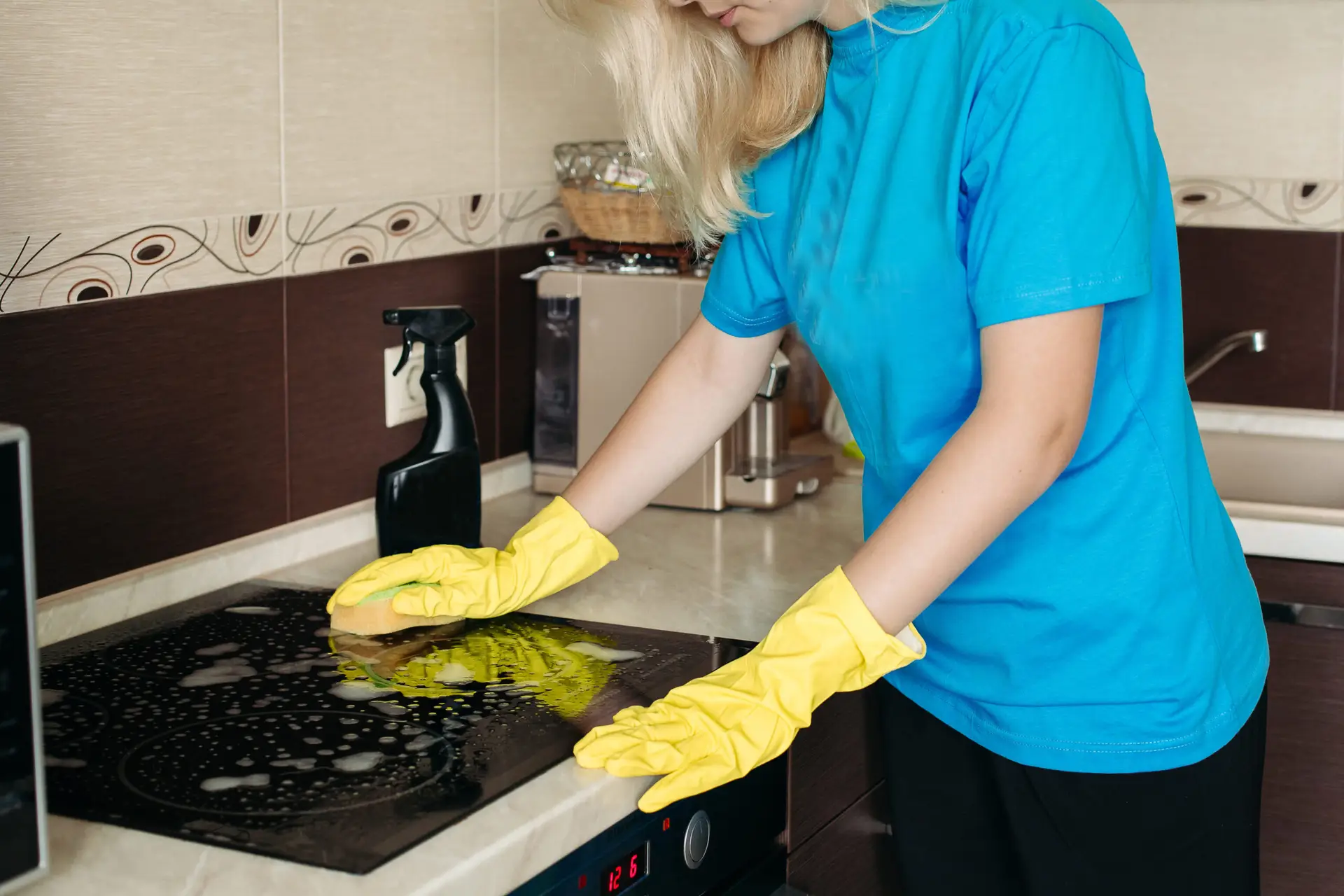
Achieving a spotless, streak-free shine on a smooth glass-ceramic cooking surface starts with understanding the proper care sequence: consult the manufacturer’s manual, use approved non-abrasive tools, remove residues gently, and buff the surface completely dry. It is essential to distinguish a glass-ceramic cooktop surface from a standard oven door or traditional metal coil burner, as specialized glass tops require precise handling to avoid permanent micro-abrasions.
The Safest Way to Clean a Glass Cooktop
The safest way to clean a glass cooktop is to ensure the surface is completely cool, wipe away loose debris with a damp microfiber cloth, apply a small amount of manufacturer-approved glass-cooktop cleaner, agitate stubborn spots with a non-abrasive pad, and buff the ceramic glass dry with a clean microfiber towel to eliminate hazy cleaning film.
Before You Start: Temperature and Surface Checks
Never apply cold cleaning liquids or water onto a hot glass-ceramic burner, as thermal shock can crack the glass. Always verify the indicator lights are off and the surface is cool to the touch.
Routine Spills vs Sugary or Melted Plastic Spills
While standard greasy spills can wait until the cooktop cools completely, sugary liquids (like syrup, jam, or melted plastic) require prompt special handling according to your model’s instructions. Sugary spills can bond permanently with hot ceramic glass; consult your manual on whether to carefully lift hot sugar with a specialized scraper before it hardens.
Cracks, Chips, or Uncertain Surface Type
If your glass-ceramic cooktop features existing structural cracks, deep chips, or exposed internal elements, stop cleaning immediately. Damaged cooktops pose electrical shock and shattering hazards; follow the manufacturer’s service advice rather than attempting DIY restoration.
Step-by-Step Routine Cleaning
Lift Loose Food Without Grinding It Into the Glass
Before applying chemical cleaners or scrubbing pads, gently wipe away loose crumbs, salt granules, and food particles with a damp microfiber cloth. Dragging gritty food debris across the glass under pressure is a primary cause of surface scratching.
Apply an Approved Glass-Cooktop Cleaner
Dispense a quarter-sized drop of an approved liquid glass-cooktop cleaner onto the surface or directly onto a specialized cleaning pad. Follow the product-label instructions regarding dwell time, allowing the formula to break down baked-on grease without requiring harsh physical force.
Remove Cleaner Residue and Buff With a Soft Cloth
Allow the cleaner to dry to a light haze, then wipe it away thoroughly with a clean, damp cloth. Always finish by buffing the glass-ceramic surface with a dry microfiber towel to distinguish any film left by unpolished cleaner from permanent scratching.
How to Handle Burned-On Food
Soften Residue With an Approved Method
For stubborn, carbonized food rings, apply an approved cream cleaner and let it sit for several minutes to soften the bond. Keep liquids away from electronic touch controls, digital display panels, and edge trim seams to prevent moisture seepage.
Use a Cooktop Scraper Only When the Manual Allows It
If your user manual (such as Whirlpool’s glass electric stovetop guide) explicitly permits it, you may use a razor-blade cooktop scraper. Hold the razor scraper at a shallow 30-to-45-degree angle against the cool glass, pushing gently underneath the burned-on spot. Always replace dull, nicked, or rusted blades immediately to prevent gouging.
When to Stop Instead of Scrubbing Harder
If persistent marks do not lift after gentle scraping or cream cleaner application, evaluate whether the blemish is metal transfer (from aluminum or copper cookware bases) or permanent glass etching. Stop scrubbing before you damage the ceramic surface.
Mistakes That Leave Scratches or Haze
Avoid these common pitfalls that permanently ruin smooth cooktop finishes:
- Steel Wool and Abrasive Scouring Pads: Metal scouring pads and coarse green nylon pads scratch glass instantly.
- Abrasive Cleaning Powders: Harsh scouring powders contain mineral silicates that grind down and dull smooth ceramic finishes.
- Dragged Cookware: Sliding heavy cast-iron or rough-bottomed pots across the glass leaves deep, unrepairable scratches.
- Excess Product Overapplication: Using too much cleaning cream without proper rinsing leaves a stubborn, smeary haze.
- Oven Cleaner on Cooktops: Using caustic oven-cleaning sprays on a glass cooktop can etch the ceramic surface or discolor metal trim pieces.
A Simple After-Cooking Care Routine
Keep your cooktop looking pristine by adopting a quick, 60-second post-cooking habit: once the surface cools down completely, wipe away fresh oil splatters with a damp microfiber cloth and buff dry.
For broader room maintenance, integrate cooktop care into your regular kitchen upkeep routine, following our comprehensive guide on kitchen deep-cleaning steps. For guidance on handling small appliances safely, review our small appliance cleaning precautions.
Professional Kitchen Cleaning in Birmingham
Maintaining sparkling glass cooktops, grease-free range hoods, and immaculate kitchen counters requires consistent, meticulous effort. For Birmingham homeowners seeking reliable support, our team provides professional residential cleaning in Birmingham. Please note that while we provide expert surface cleaning and maintenance, we do not perform physical scratch removal, glass repair, or appliance mechanical servicing.
Ask Pristine About Surface-Safe Kitchen Care
When requesting an estimate, be sure to identify your cooktop material and specific kitchen cleaning priorities so our team can tailor the scope to your exact needs. Contact our team today to request a cleaning estimate.
Frequently Asked Questions
Can I use a razor blade on a glass stove top?
You can use a razor-blade scraper only if the appliance manufacturer explicitly authorizes it in your owner’s manual. When permitted, use a brand-new single-edge razor blade held at a low 30-degree angle against a cool glass surface to gently lift burned-on spills.
Why is my glass stove top cloudy after cleaning?
Cloudiness after cleaning is typically caused by residual cleaning cream film, hard-water mineral deposits, or using a dirty cloth. Wipe the surface with a clean, damp microfiber towel and buff dry to restore clarity.
Does baking soda scratch a glass cooktop?
While baking soda is milder than commercial scouring powders, dry baking soda crystals can still scratch smooth glass-ceramic surfaces if rubbed aggressively. Always mix baking soda into a smooth, wet paste and use a non-abrasive pad.
Can cleaning remove scratches from a stove top?
No. Routine cleaning and polishing compounds cannot repair physical scratches, gouges, or cracks in glass-ceramic cooktops. Deep scratches alter the structural integrity of the glass and generally require professional glass replacement by an authorized service technician.