
Bathrooms are among the most heavily used spaces in any home, constantly battling moisture, soap scum, hard water mineral deposits, and everyday grime. While a quick weekly wipe-down keeps surfaces tidy, it cannot prevent the gradual buildup of mildew in tile grout, grime around faucet bases, or hidden bacteria behind the toilet.
Knowing how to methodically deep-clean a bathroom transforms a tiring chore into an efficient routine, restoring a genuinely hygienic and sparkling space.
Quick Answer: What Is the Best Way to Deep Clean a Bathroom?
The most effective way to deep clean a bathroom is to work systematically from top to bottom and back to front:
- Dust and Prep: Clear all countertop items and dust high fixtures, vents, and corners first.
- Apply and Dwell: Spray cleaner on shower walls, tubs, and sinks, allowing the solution to break down soap scum while you tackle other zones.
- Scrub and Sanitize: Scrub tile grout, deep-clean the toilet inside and out, wipe mirrors, and finish by washing the baseboards and floors.
What Makes Bathroom Deep Cleaning Different From Regular Cleaning?
Regular bathroom cleaning focuses on surface maintenance—wiping the sink, swapping hand towels, swishing the toilet bowl, and quick-mopping the floor.
Deep cleaning, by contrast, targets neglected accumulation zones. It involves heavy-duty descaling of glass shower doors, scrubbing discolored tile grout, sanitizing hidden hinges and baseboards, and treating mold spores in damp corners where everyday cleaning cloths never reach.
Supplies and Products You Need
Before you start scrubbing, gather the right tools to make the job faster and more effective:
- Bathroom Cleaner: A multi-surface disinfectant and a heavy-duty soap scum remover.
- Grout Brush: A stiff-bristled brush designed to target narrow tile lines.
- Microfiber Cloths: Tightly woven cloths for polishing mirrors and wiping chrome fixtures streak-free.
- Glass Cleaner: For crystal-clear shower doors and vanity mirrors.
- Toilet Bowl Cleaner: An effective disinfectant gel paired with a sturdy toilet brush.
- Protective Gloves: Heavy-duty rubber gloves to protect your hands from strong cleaning agents.
Bathroom Deep Cleaning Checklist
Clear Counters and Remove Items
Take everything off your vanity countertops, shower shelves, and window sills. Discard empty shampoo bottles, wash toothbrush holders, and wipe down the bare surfaces.
Dust Vents, Light Fixtures, and Corners
Always start high. Use an extended duster or vacuum attachment to clear cobwebs from ceiling corners, dust ceiling exhaust fan covers, and wipe down light fixtures.
Clean Shower Walls, Tub, and Glass
Spray your tub and shower walls generously with a soap scum remover. Let it dwell for 5 to 10 minutes to dissolve oily buildup, then scrub the surfaces and rinse thoroughly. Finish by cleaning glass shower doors.
Scrub Grout and Tile Edges
Apply a targeted tile cleaner or baking soda paste to discolored grout lines. Use your stiff grout brush in firm back-and-forth strokes to lift embedded mildew and dirt, then rinse with clean water.
Deep Clean the Toilet Inside and Out
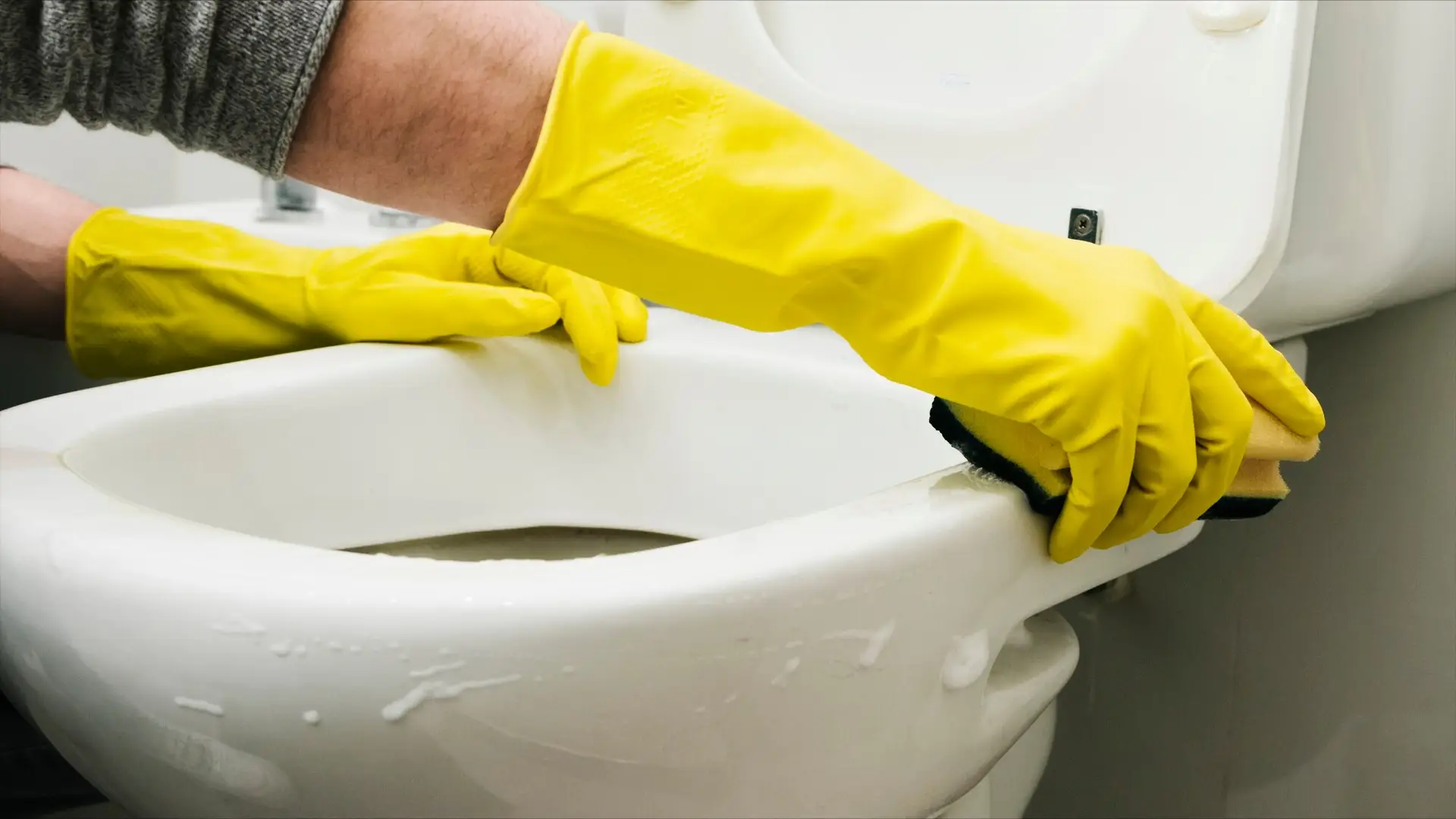
Apply toilet bowl cleaner under the rim and let it sit. Meanwhile, wipe down the entire exterior of the toilet—including the tank, handle, base, and the hard-to-reach bolts behind the seat—using a disinfectant spray. Scrub the bowl and flush.
Clean Sinks, Faucets, and Vanity Areas
Scrub the basin and use an old toothbrush to clear gunk around faucet handles and the pop-up drain stopper. Wipe down the vanity mirror with a microfiber cloth and glass cleaner.
Wash Floors and Baseboards
Wipe down bathroom baseboards to catch stray dust and hair, then vacuum or sweep the floor. Finish by mopping thoroughly with a disinfectant floor cleaner, working your way backward toward the exit.
Common Bathroom Deep Cleaning Mistakes
- Mixing Cleaning Chemicals: Never mix bleach with ammonia, vinegar, or acidic toilet bowl cleaners, as this creates hazardous, toxic fumes.
- Wiping Too Quickly: Spraying cleaner and wiping it away immediately wastes active ingredients. Let products dwell for a few minutes to break down grease and soap scum.
- Starting From the Floor Up: Cleaning floors before dusting high fixtures or wiping counters means falling debris will dirty your freshly cleaned floors.
How Often Should a Bathroom Be Deep Cleaned?
- Every 2 to 4 Weeks: Ideal for busy family bathrooms or heavily used guest baths.
- Monthly: Sufficient for master bathrooms that receive diligent weekly maintenance.
- Seasonally: At a minimum, every home should undergo a comprehensive bathroom deep clean 4 times a year to protect tile grout and prevent mold growth.
When to Hire Professional Bathroom Cleaning Services
While maintaining a clean bathroom on a weekly basis is manageable, tackling stubborn soap scum, discolored grout lines, and ceiling vents can be exhausting. Partnering with a reliable recurring house cleaning service ensures your bathrooms, kitchens, and living spaces remain impeccably sanitized, polished, and fresh without consuming your valuable weekends.
FAQ
What is included in a bathroom deep cleaning?
A bathroom deep cleaning includes scrubbing tile grout, descaling shower glass and faucets, deep cleaning the toilet inside and out, wiping baseboards, washing vents and light fixtures, sanitizing counters, and mopping floors.
How long does it take to deep clean a bathroom?
Deep cleaning a standard bathroom typically takes between 45 to 90 minutes, depending on the size of the room, the layout, and how much buildup has accumulated.
How often should bathrooms be deep cleaned?
Bathrooms should be deep cleaned every 2 to 4 weeks in homes with children or pets, or at least monthly to prevent heavy mildew and mineral scale buildup.
What is the best cleaner for bathroom grout?
A paste made of baking soda and water—or a specialized oxygen bleach cleaner—paired with a stiff-bristled brush is generally the safest and most effective way to clean and brighten bathroom grout.
Is professional bathroom cleaning worth it?
Yes. Hiring professionals saves you physical effort, ensures medical-grade sanitization of high-touch surfaces, and keeps grout and fixtures looking brand new over time.