
A dishwasher is one of the most hardworking appliances in the home, but over time, accumulated food particles, grease, hard-water minerals, and detergent scum can compromise its cleaning efficiency and leave behind unpleasant odors. However, it is essential to distinguish between simple surface grime, a dirty removable filter, and an underlying plumbing or drainage fault. While a thorough cleaning cycle restores freshness, it cannot resolve mechanical issues or clogged drain lines.
After bringing your dishwasher back to peak performance, ensure the rest of your cooking space matches that level of cleanliness. Check out our comprehensive kitchen deep-cleaning checklist for step-by-step guidance across every surface.
What Is the Best Way to Clean a Dishwasher?
The best way to clean a dishwasher is to unload all dishes, remove and rinse the filter under warm water using a soft brush, wipe down the rubber door gaskets and spray arms, run a hot cycle with a manufacturer-approved dishwasher cleaner or vinegar (if allowed), and verify the unit drains completely.
Identify the Filter and Cleaning Cycle for Your Model
Before applying cleaning agents or removing internal components, consult your owner’s manual to understand your specific model’s design and requirements.
Manual-Clean Filters vs Self-Cleaning Systems
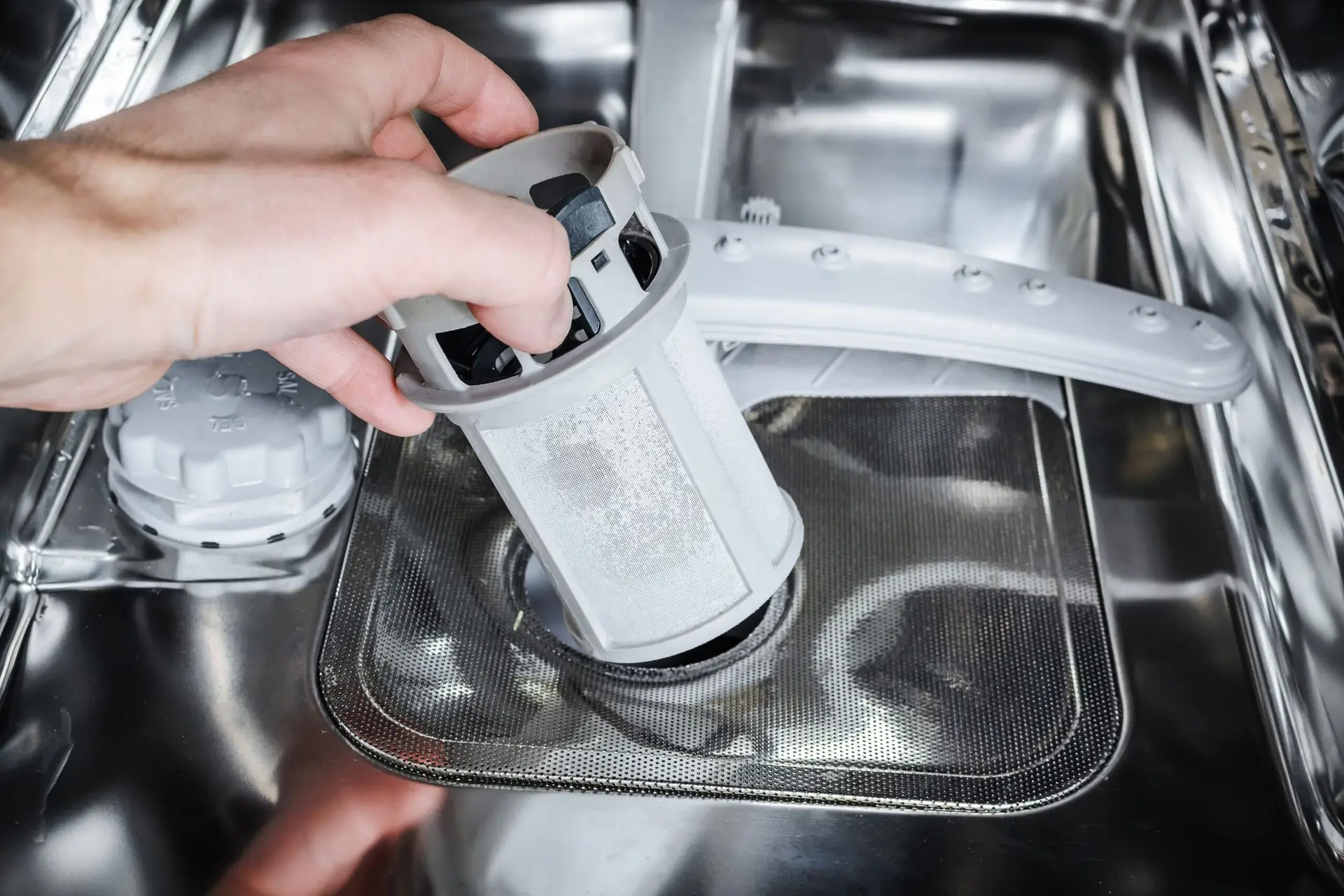
Not every dishwasher uses the same filtration design. Manual-clean filters feature a removable cylindrical mesh assembly beneath the lower rack that requires regular hand-rinsing. In contrast, self-cleaning systems rely on an internal grinder mechanism to break down food particles. Attempting to force open a self-cleaning unit can cause permanent mechanical damage.
Supplies and Safety Checks
Gather these basic supplies before starting:
- Soft-bristled brush or old toothbrush
- Microfiber cloths
- Mild liquid dish soap and warm water
- Manufacturer-approved dishwasher cleaner or white vinegar (if permitted)
Always power down the unit or unplug it before removing internal parts, and refer to Whirlpool’s dishwasher filter guide or your brand’s specific manual for component handling.
Step-by-Step Dishwasher Cleaning
Follow these steps to safely restore your dishwasher’s interior:
Remove Dishes and Inspect the Bottom
Unload all dishware, utensils, and racks. Inspect the bottom basin for loose debris, glass fragments, or large food scraps. Remove accessible waste carefully without reaching blindly into exposed drain mechanisms.
Rinse and Reinstall the Filter Correctly
If your unit features a manual filter assembly, twist the filter counterclockwise and lift it out carefully.
Loosen Trapped Food With a Soft Brush
Rinse the filter under warm running water. Use a soft-bristled brush and mild dish soap to gently dislodge trapped grease and food particles. Avoid wire brushes, steel wool, or abrasive scouring pads, which can puncture or tear the fine mesh filter screen.
Check the Filter Seating and Locking Marks
When placing the filter back into the tub floor, align the directional arrows or locking indicator marks provided by your manufacturer.
Verify the Filter Is Secure Before Running a Cycle
Never run a dishwasher without the filter properly installed and locked in place. Operating the machine with an unseated or missing filter allows large food debris to enter the pump and drain impellers, leading to costly mechanical clogs.
Wipe Door Edges, Gaskets, and Detergent Residue
Wash water does not reach the outer door perimeter or the rubber door gaskets during a normal cycle. Dip a microfiber cloth into warm, soapy water and wipe around the rubber door seal, door edges, latch, and detergent dispenser door to remove trapped soap scum and mold spores.
Run the Manufacturer-Approved Cleaning Cycle
Place a commercial dishwasher cleaning tab or liquid bottle inside the empty tub as directed by the product instructions. Alternatively, if permitted by your user guide (such as Whirlpool’s dishwasher care recommendations), place a bowl containing 1 cup of white distilled vinegar on the top rack and run a hot water cycle. Never mix vinegar and commercial cleaners or bleach together in the same run.
Why the Dishwasher Still Smells
If persistent odors or standing water remain after a full cleaning pass, address the underlying cause:
Standing Water or Repeated Drainage Problems
If dirty water pools at the bottom of the tub after a cycle finishes, stop running cleaning solutions. Standing water usually points to a clogged garbage disposal connection, a kinked drain hose, or a sewer line backup. Refer the issue to an appliance repair technician or licensed plumber rather than escalating chemical usage.
Food Debris and Excess Detergent
| Symptom | Cause | Maintenance Adjustment |
| Musty, Sour Smell | Food particles trapped in the filter or rubber gasket folds. | Clean the manual filter weekly and wipe down door gaskets after heavy use. |
| White Chalky Film | Hard-water mineral deposits coating interior walls and spray arms. | Run a hot cycle with an approved hard-water descaler monthly. |
| Slippery Chemical Soap Residue | Overusing liquid or powder detergent, or low water temperature. | Reduce detergent dosage and verify incoming water temperature reaches at least 120°F. |
How Often Should You Clean Each Part?
Adjust your maintenance routine based on household size and meal frequency:
- Weekly: Inspect the tub floor, remove visible food scraps, and rinse manual mesh filters.
- Monthly: Wipe down rubber door seals, wash spray arms, and run a dedicated tub-cleaning or descaling cycle.
- Quarterly / Bi-Annually: Perform a full component inspection, check spray-arm water nozzle holes for mineral blockages, and clean around the door latch assembly.
For other helpful home maintenance tips across your culinary space, explore our guide on cleaning small kitchen gadgets.
When to Add Kitchen Detail Work to a Cleaning Visit
Keeping up with kitchen upkeep, baseboards, countertops, and appliances can be time-consuming. While Pristine Cleaning Services provides thorough household support, please note that we are a residential cleaning company, not an appliance repair or plumbing service.
If you are looking for general housekeeping or detailed home care, our team provides reliable residential cleaning in Birmingham. Please confirm appliance interior add-ons during booking so we can tailor our service scope accurately.
Request a Birmingham Kitchen Cleaning Estimate
When requesting your free quote, let us know your primary priorities and specify whether you need routine surface care or detailed interior appliance options. Contact our team today to request a cleaning estimate.
Frequently Asked Questions
Can I clean my dishwasher with vinegar?
You can use white distilled vinegar only if your appliance manufacturer explicitly permits it in the owner’s manual. When allowed, place 1 cup of white vinegar in a dishwasher-safe bowl on the top rack and run a hot cycle. Never mix vinegar with chlorine bleach or commercial cleaning chemicals.
Should I remove the dishwasher filter every time?
You do not need to remove the filter after every single load, but you should inspect the tub floor after heavy meal prep. Rinsing a manual-clean filter once a week or every two weeks prevents food buildup and keeps wash water circulating freely.
Why does my dishwasher smell after cleaning?
If a dishwasher smells immediately after cleaning, food particles may still be trapped inside the spray arms, or there may be a plumbing issue—such as a clogged drain hose, a missing high-drain loop under the sink, or standing water in the garbage disposal.
Can dish soap be used in a dishwasher cleaning cycle?
No. Never place liquid hand dish soap (such as Dawn) inside a dishwasher. Even a few drops will create excessive suds that overflow onto your kitchen floor, potentially damaging internal electrical components and causing floods. Liquid dish soap should only be used to hand-wash a removed filter at the sink.