
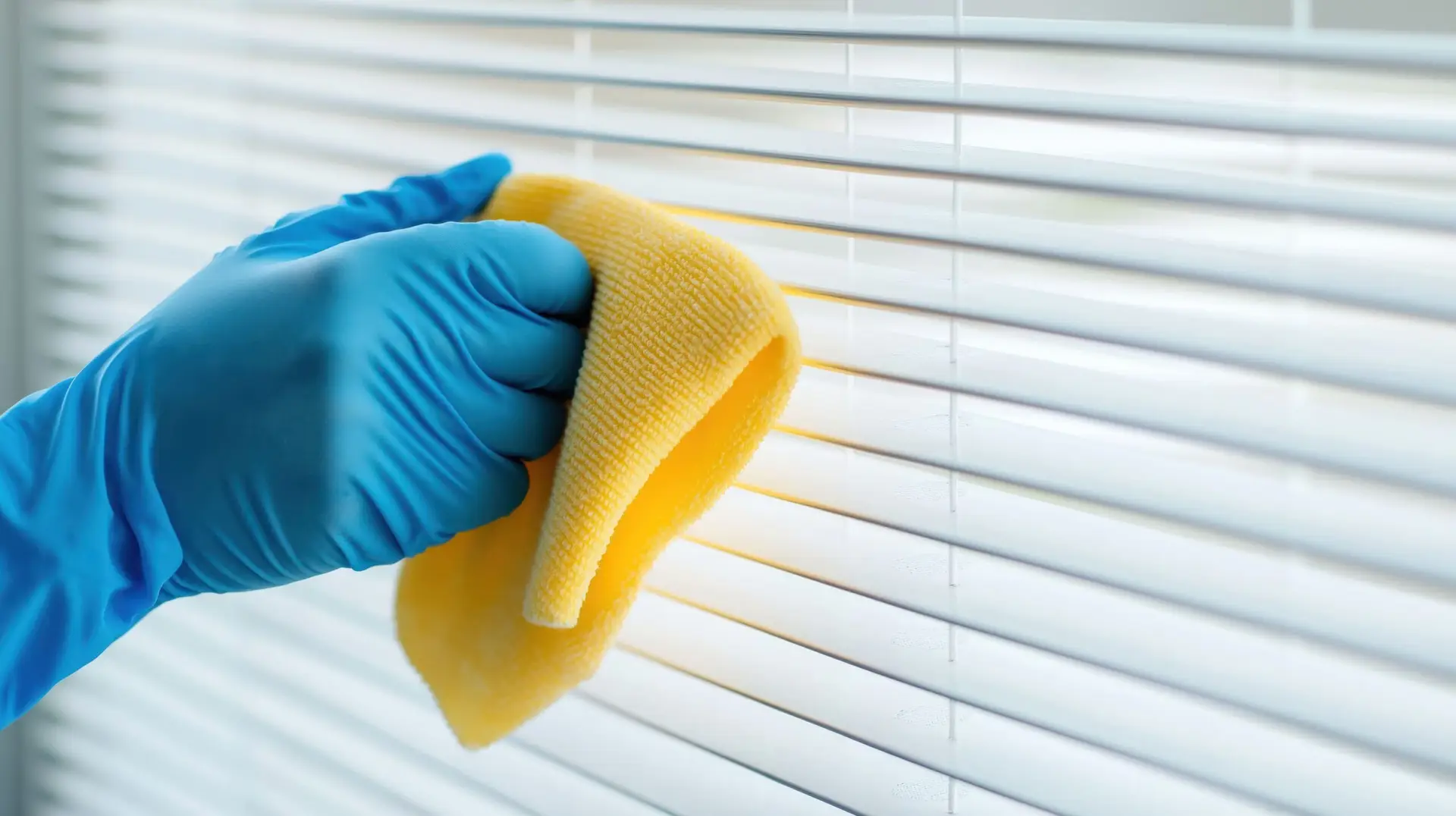
Quick Answer: Best Way to Dust Blinds
Close the blinds, dust from top to bottom with microfiber, flip the slats, repeat, and vacuum below.
Closing your blinds flat creates a continuous surface for wiping down dust quickly, allowing you to flip the slats and repeat the process on the reverse side.
Why Blinds Hold So Much Dust
Explain static, airflow, window pollen, pet dander, and room traffic.
Blinds hang directly in the path of airflow from windows and HVAC vents. As air currents pass over the slats, static electricity draws airborne dust, pet dander, outdoor pollen, and cooking grease, binding them into a stubborn film over time.
Best Tools for Cleaning Blinds
Microfiber cloth.
Electrostatic microfiber fibers trap and hold dust particles rather than knocking them into the air.
Vacuum brush attachment.
A soft-bristled brush nozzle on your vacuum lifts loose debris instantly.
Damp cloth for sticky residue.
A slightly damp cloth cuts through kitchen grease or fingerprints on individual slats.
Extendable duster for hard-to-reach windows.
Telescoping dusters make high, vaulted living room windows easy to clean safely from the floor.
Cleaning Method by Blind Type
Faux wood blinds.
Wipe down with a slightly damp microfiber cloth and mild soap; avoid soaking to prevent warping.
Vinyl blinds.
Durable vinyl slats can be wiped with a damp cloth or even unhooked and rinsed in a bathtub for a deep clean.
Fabric shades.
Use a soft vacuum upholstery brush attachment or spot-clean stains gently with a mild fabric cleaner.
Avoid soaking fabric or wood blinds.
Excess water ruins genuine wood and ruins the stiffeners in fabric shades, causing permanent water damage or shrinking.
For heavy dust, clean floors after blinds.
Always vacuum or mop the floors directly beneath your windows after cleaning your blinds, as heavy dust particles will fall downward during the wipe-down.
CTA: Link dust-heavy homes to weekly or biweekly maintenance cleaning.
If keeping up with dusty blinds and window frames feels like an endless chore, let professional help lighten your load. Explore our dependable Residential Cleaning or set up consistent Weekly Cleaning to keep your entire home effortlessly pristine. For more great home care advice, check out our guide on how to protect your home from everyday dirt and dust.
Common Blind Cleaning Mistakes
Using feather dusters that spread particles.
Traditional feather dusters merely scatter lightweight dust into the surrounding air and onto your carpets.
Spraying product directly on blinds.
Spraying cleaners straight onto slats can splatter window glass or cause uneven liquid streaking.
Forgetting windowsills and floors below.
Neglecting the sills and flooring underneath leaves a ring of fallen dust right where you walk.
Frequently Asked Questions
What is the fastest way to clean blinds?
The fastest method is closing the slats flat, wiping top-to-bottom with a microfiber hand tool or mitt, flipping the slats, and vacuuming the floor underneath.
Is microfiber good for blinds?
Yes! Microfiber creates a natural static charge that attracts and locks onto fine dust particles much better than standard cotton rags.
Can I wash blinds with water?
You can wash vinyl and faux wood blinds with water and mild soap, but you should avoid using excess water on genuine wood or fabric blinds.
How often should blinds be cleaned?
Dust your blinds during your regular weekly cleaning routine, and schedule a deep damp wipe-down every 3 to 6 months.
Should I dust blinds before vacuuming?
Yes. Dusting your blinds first ensures that any dislodged debris falling to the floor is vacuumed up during the final floor care step.