
Dust and debris build up fast in a warehouse. Between forklifts moving through aisles, pallets coming and going, and constant foot traffic, even a well-run facility can start looking worn down within weeks. Birmingham warehouse managers are increasingly turning to professional cleaning to keep operations safe and presentable.
This is also where office cleaning services extend beyond a typical desk-and-lobby setup. Many companies that operate warehouses also run an attached office space, and both areas need a cleaning plan that fits their very different demands.
Why industrial space cleaning matters beyond appearance
A clean warehouse is not just about looking organized for visitors or auditors. Dust accumulation on shelving, floors, and equipment can create slip hazards, clog ventilation systems, and shorten the life of machinery. Loose debris near walkways increases the risk of trips and falls, which is a real concern in facilities with constant movement.
Industrial space cleaning typically covers:
- Sweeping and mopping or scrubbing large floor areas
- Dust removal from shelving, beams, and high surfaces
- Debris removal from loading docks and storage areas
- Trash and recycling removal across the facility
- Wiping down break room and office areas attached to the warehouse
- Restroom cleaning and sanitizing for staff facilities
Facilities that schedule regular cleaning tend to spend less on equipment repairs over time, since dust and grime are common contributors to mechanical wear.
Floor cleaning for industrial spaces
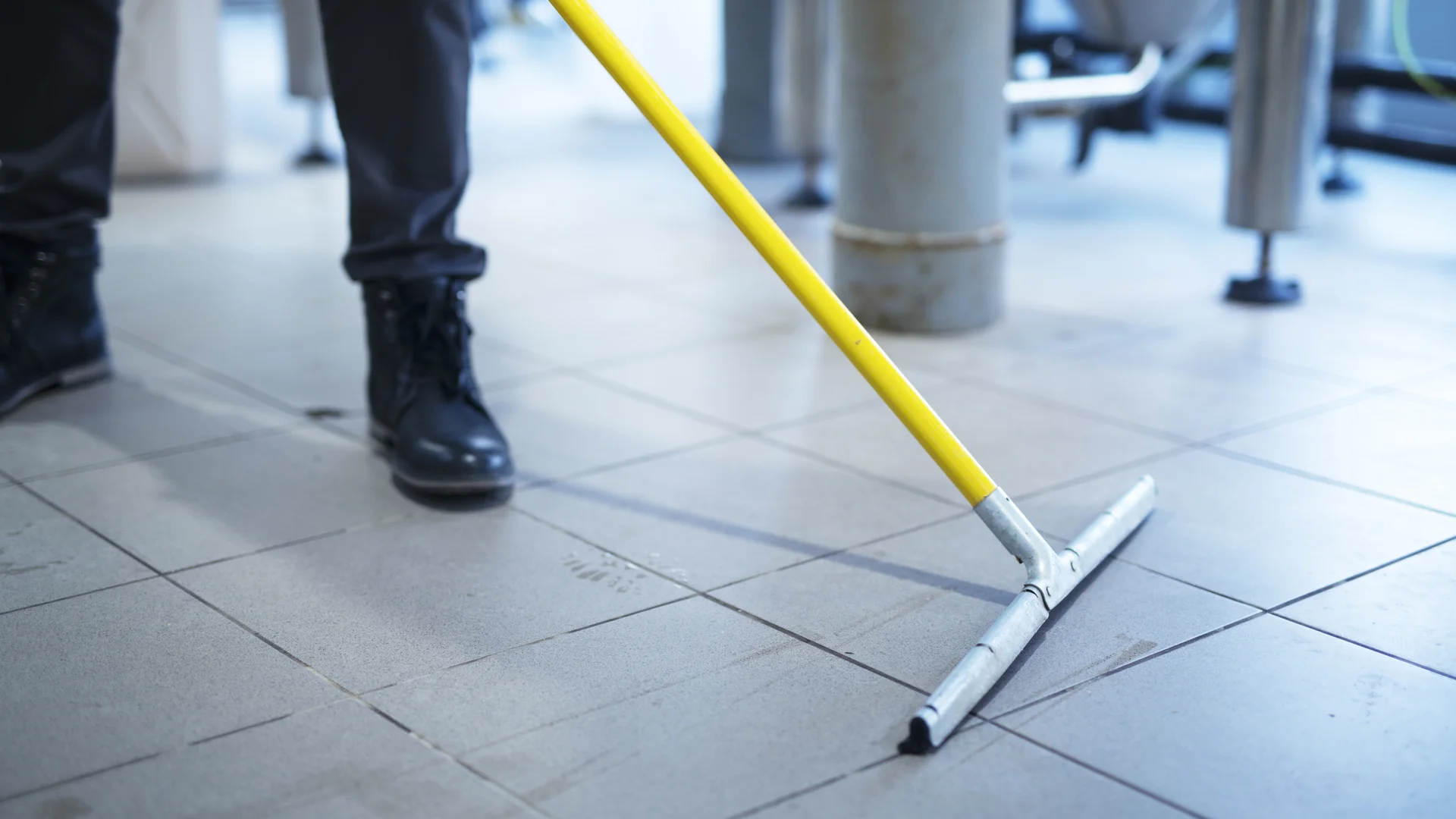
Warehouse floors take a beating. Forklift tires track in dirt, spills happen, and concrete naturally collects dust that regular sweeping cannot fully remove. Floor cleaning for industrial spaces often requires equipment beyond a standard mop and bucket, such as scrubbing machines designed for large open areas.
Keeping floors clear also supports safety compliance. Clean, dry, and well-marked walkways reduce the risk of accidents and make it easier for staff to spot hazards like spilled liquid or scattered debris.
Dust and debris removal in busy facilities
Dust in a warehouse is rarely just dirt. It is often a mix of packaging material, concrete particles, and whatever the facility produces or stores. Left unmanaged, that dust settles on inventory, machinery, and ventilation systems.
Professional cleaners frequently find the heaviest dust buildup in places that get overlooked during daily operations, like the tops of racking units, light fixtures, and corners near loading dock doors. A scheduled cleaning plan targets these areas on a rotating basis instead of waiting until the buildup becomes visible from the floor.
Debris removal matters just as much. Packaging scraps, broken pallets, and shrink wrap can pile up quickly near receiving areas. Regular removal keeps walkways clear and reduces fire hazards tied to accumulated cardboard and plastic.
Office cleaning services in Birmingham, AL for warehouse facilities
Most warehouses include some kind of office space, whether it is a small front office or a full administrative wing. These areas need a different cleaning approach than the warehouse floor.
Office areas benefit from:
- Vacuuming carpets and mopping hard floors
- Dusting desks, monitors, and shared equipment
- Sanitizing high-touch surfaces like door handles and shared phones
- Cleaning break room counters, sinks, and appliance exteriors
Many commercial cleaning companies, including Pristine Cleaning, can manage both the warehouse floor and the attached office on the same visit, which simplifies scheduling for facility managers.
Setting a cleaning frequency that fits your facility
The right schedule depends on how much traffic and material movement a facility sees. A few starting points:
- High-traffic distribution centers often need cleaning several times per week.
- Storage-only facilities with less daily activity may only need weekly or biweekly visits.
- Office areas attached to a warehouse typically follow a standard commercial schedule, often three to five times per week.
A facility manager can always start with a baseline schedule and adjust based on how quickly dust and debris reappear between visits.
In-house cleaning crews versus hiring a professional team
Some facilities try to manage cleaning with in-house staff, often pulling warehouse workers away from their main job to handle sweeping or trash removal between shifts. This can work for very small operations, but it usually breaks down as a facility grows.
In-house cleaning tends to be inconsistent because it competes with other priorities. A busy receiving day means cleaning gets pushed aside, and over time, the gaps between cleanings stretch longer than planned. A dedicated cleaning team, by contrast, follows a fixed schedule regardless of how busy the warehouse floor gets, which keeps standards steady.
There is also a cost side to consider. Pulling warehouse staff off their primary tasks to clean is rarely efficient, since their time is usually better spent on operations. A professional commercial cleaning company, including teams that also handle office cleaning services in Birmingham, AL, can manage the entire facility without disrupting day-to-day work.
Seasonal considerations for warehouse and industrial cleaning
Birmingham’s climate brings its own cleaning challenges throughout the year. Humid summers can lead to mold and mildew in poorly ventilated storage areas, while pollen season coats surfaces and ventilation intakes with a fine yellow dust that settles quickly on shelving and equipment.
Winter months bring different issues, like salt and moisture tracked in from outside during rare cold snaps, or increased dust from heating systems running for the first time after months of inactivity. A cleaning plan that adjusts slightly by season, rather than staying identical year-round, tends to catch these issues before they become bigger problems.
Facilities with climate-sensitive inventory, such as paper goods or electronics, benefit especially from this kind of seasonal attention, since humidity and dust both have the potential to affect stored materials over time.
How cleaning supports inventory and equipment longevity
Dust and debris do more than make a warehouse look messy. Fine particles can work their way into machinery, conveyor systems, and HVAC components, leading to more frequent breakdowns and higher maintenance costs over time.
Inventory stored on open shelving is also vulnerable. Dust settling on boxes and packaging can affect product presentation, especially for goods that ship directly to retail or consumer customers. Facilities that maintain a consistent cleaning schedule often report fewer equipment issues and less time spent on unplanned maintenance, since dust and debris are caught before they accumulate to problematic levels.
Preparing your facility for a cleaning visit
A little preparation on the front end helps a cleaning crew work more efficiently and safely. Clearing loose items from main walkways, flagging any areas that are off-limits due to active equipment, and letting the cleaning team know about recent spills or known problem areas all make a visit go smoother.
It also helps to designate a point of contact on staff who can answer quick questions during the visit, especially for larger facilities where cleaning needs may shift week to week. Facilities that combine the warehouse floor and the office space on the same schedule often find it easier to coordinate one point of contact for both areas, rather than managing two separate vendors.
Sharing a simple list of priority areas before each visit, even informally, helps cleaning crews focus their time where it matters most, especially in larger facilities where covering every square foot in a single visit is not always realistic.
What a thorough warehouse cleaning checklist covers
A complete cleaning visit usually moves through the facility in stages rather than treating every area the same way. A typical checklist includes:
- Sweeping and scrubbing main floor areas and walkways
- Dusting shelving units, beams, and overhead fixtures
- Wiping down break room counters, tables, and appliance exteriors
- Cleaning and restocking staff restrooms
- Removing trash and recycling from collection points throughout the facility
- Spot-cleaning office areas, including desks and shared equipment
Facilities that combine warehouse and office cleaning on a single contract often find the checklist easier to manage, since one provider tracks the full scope of the building instead of splitting responsibilities between two separate teams.
Common challenges with warehouse cleaning
Some warehouses struggle to keep cleaning consistent because the space is large and the work feels never-ending. Without a clear plan, cleaning often gets pushed to whenever staff have spare time, which means it rarely happens at all.
Another common challenge is mismatched expectations. A general commercial cleaning crew without industrial experience may not know how to safely clean around heavy equipment or how to prioritize high-risk areas like loading docks. Working with a company that understands both office cleaning services in Birmingham, AL and industrial environments helps avoid that gap.
The Occupational Safety and Health Administration notes that good housekeeping practices, including regular removal of combustible dust and debris, play a direct role in reducing workplace hazards in industrial settings.
Frequently asked questions
How often should a warehouse be professionally cleaned? Most warehouses benefit from cleaning two to five times per week, depending on traffic, the type of material handled, and the size of the facility. Facilities with heavier daily activity, like high-volume distribution centers, generally lean toward the higher end of that range.
Can one company clean both the warehouse floor and the office area? Yes. Many commercial cleaning companies, including Pristine Cleaning, offer combined plans that cover both spaces during the same visit, which simplifies scheduling and gives facility managers a single point of contact for the entire building.
Does warehouse cleaning help with safety compliance? Regular cleaning reduces dust buildup, clears walkways, and removes debris that can contribute to slips, trips, and fire hazards, all of which support a safer working environment and a smoother experience during safety inspections.
Is dust removal really necessary if the floors look clean? Yes. Dust often settles on shelving, beams, and equipment long before it becomes visible on the floor, and it can affect machinery performance and indoor air quality over time, even when the space appears tidy at a glance.
A cleaner facility, fewer disruptions
Warehouse and industrial cleaning is not a one-time fix. It is an ongoing part of running a safe, efficient facility. A consistent plan keeps floors clear, dust under control, and the attached office space just as presentable as the rest of the building.
Facility managers who set a clear schedule, rather than reacting only when a problem becomes visible, tend to spend less time troubleshooting and more time focused on operations. A few months into a consistent plan, most teams notice fewer equipment issues, fewer safety concerns, and a building that simply feels easier to work in.
If your Birmingham facility is overdue for a deeper clean, Pristine Cleaning’s commercial cleaning team can build a plan around your warehouse and office space together. If your facility’s front office also serves clients directly, our office cleaning guide for professional services covers what client-facing spaces need. Request a free estimate for your facility.